
Is your helper ready for an emergency?
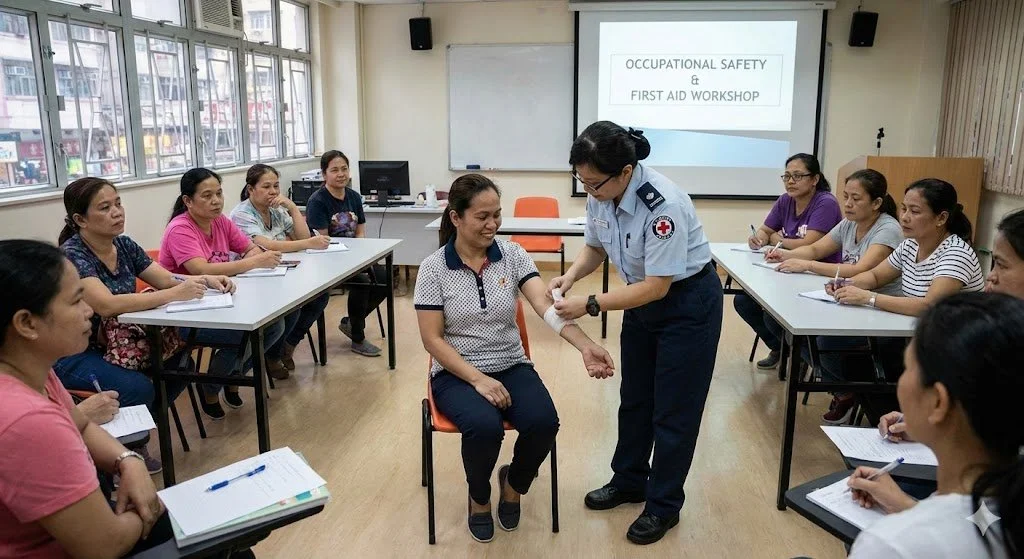
Employers often feel helpers lack "common sense," but common sense is local and cultural. What is obvious in a rural village is not obvious in a Hong Kong high-rise. Assuming your helper will know what to do in an emergency is a mistake; relying on training saves lives.
Domestic workers are often alone with children or the elderly. In a fire, they must manage panic, smoke, and confusion instantly. Here is how you can move them from "improvising" to "prepared."
1. Walk the Escape Route Don't just talk about it. Physically walk the escape route together. Show her exactly which stairwells to use and where the refuge floors are. Do this when the building is calm so she can build a mental map.
2. Create a "Decision Tree" Clarify the rules: When should she run? When should she stay and seal the door? Verbal instructions are forgotten under stress, so write down a simple Emergency Plan (in English and her native language) covering fire, injuries, and 999 protocols.
3. Review Home Safety Basics
Kitchen: Oil fires (never use water to try and put out an oil fire!), gas safety, and never leaving the stove unattended.
Electrical: No overloaded sockets or damaged cords.
Windows: Strictly follow regulations—locked grilles and no leaning out.
4. Practice & Support Run "mini-drills" occasionally (e.g., "What if the alarm goes off now?"). If a scare happens, debrief calmly without accusation. Emotional support turns fear into confidence.
Please share your own safety tips with us so we can pass them on to the Arrow community.
