
My helper moves like a SNAIL
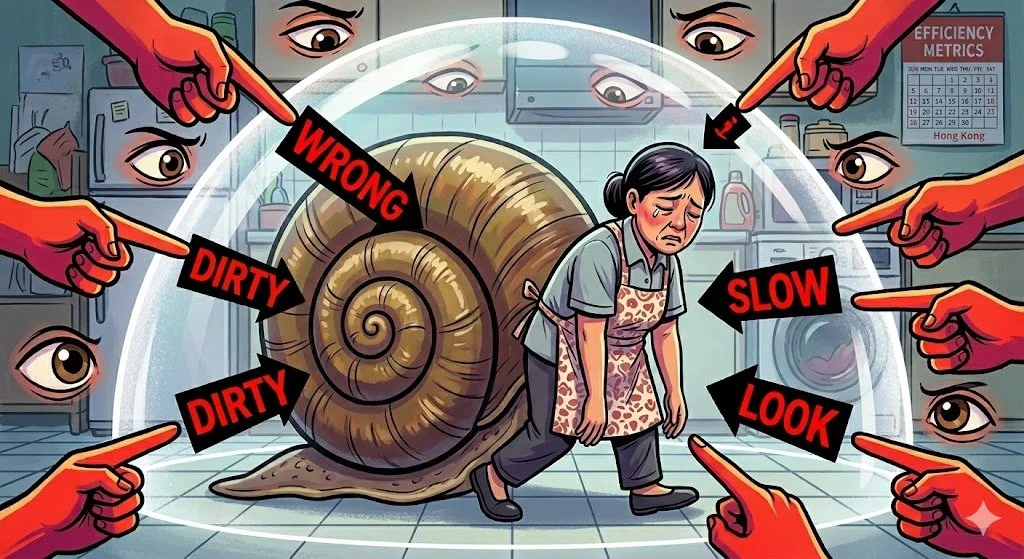
How Hiya (Shame) Causes Paralysis Rather Than Speed
It is a scenario many Hong Kong employers know well: you notice your new helper making a mistake—perhaps she forgot to close the toilet lid before flushing, or she mixed up the ingredients for the baby’s porridge, and desperate to keep your household running on time, you correct her quickly, perhaps with a raised voice or an intense tone.
You expect her to move faster to fix it. Instead, the exact opposite happens. She slows down to a crawl, moving like a snail, or freezes entirely.
To a results-oriented Hong Kong mindset, this looks like laziness, defiance, or a lack of care. But beneath the surface, a powerful cultural dynamic is at play: Hiya.
Understanding the Psychology of Hiya
In Filipino psychology, Hiya is often translated as "shame," but it is much deeper than that. It is a profound sense of social propriety and dignity. When a helper is repeatedly or sharply corrected, she doesn't experience it as a simple "performance review." She experiences it as a deep, painful wound to her standing in the household.
When Hiya is triggered by a stressed employer, the helper's natural psychological defense mechanism is not to accelerate—it is to freeze.
The Fear of the Next Mistake: Under the weight of Hiya, a helper becomes terrified of making another mistake that will bring more shame.
Cognitive Overload: Her brain enters a state of Tulala (blankness or shock). She is double-thinking every single move—how she holds the knife, where she places the cloth—to the point where her physical speed drops significantly.
The Irony of Pressure: The more an employer hovers, checks, and criticizes to force speed, the more intense the Hiya becomes, slowing the helper down even further.
🧠 Thought Question for Employers
Look at your current interaction style. When your helper slows down or makes a seemingly obvious mistake after being taught, are you watching her every move? Is it possible that your proximity and anxious energy are actually triggering the very paralysis you are trying to fix?
🛠️ Action Points for the Hong Kong Home
To break the cycle of Hiya-induced paralysis and get your household back up to speed, try shifting from verbal pressure to structured systems:
Step Back to Speed Up: If you notice her freezing, physically leave the room for a few minutes. Give her the emotional space to reset her brain without feeling watched.
Use the "Paper Boss" (Checklists): Instead of verbally tracking her ("Where is the fish? Why is the floor wet?"), use a written daily schedule or rundown. Let her check items off on paper. This removes the emotional friction of face-to-face correction and gives her a sense of achievement rather than shame.
Praise Before You Correct: Protect her dignity. If you need to correct a mistake, start with one thing she did well that day. A helper who feels her dignity is intact will naturally move with more confidence and speed.
