
The "Yes" That Doesn't Mean "Yes"
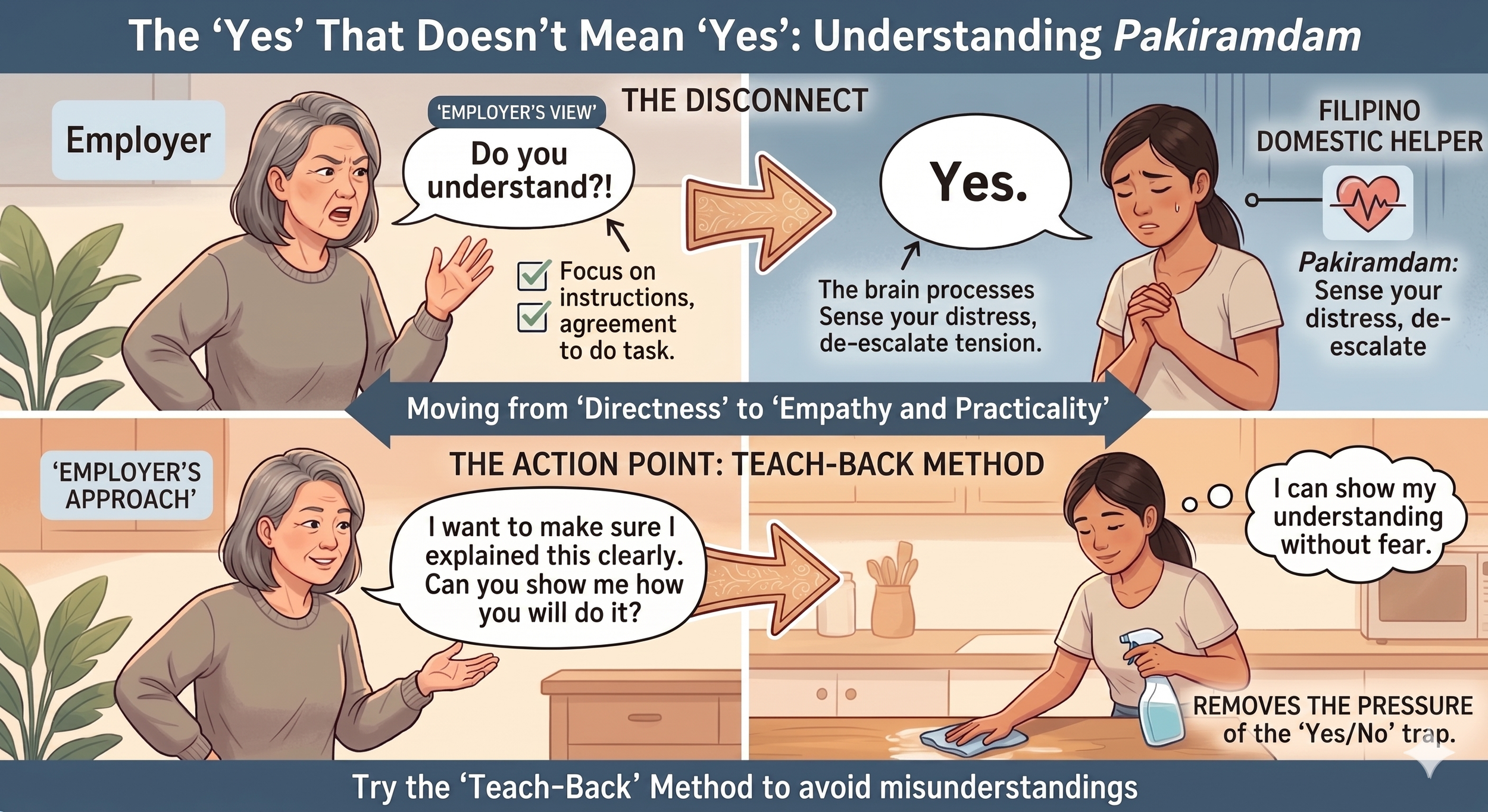
Understanding the Filipino concept of Pakiramdam (The Shared Feeling)
In Hong Kong, we value directness. We ask a question; we expect a "Yes" or "No." But for your Filipino helper, direct confrontation is a sign of a breakdown in the relationship. When you are angry and ask, "Do you understand?", and she says "Yes" (but then fails to do the task), she isn't lying to you. She is practicing Pakiramdam.
She is "feeling" your anger and her primary goal is to de-escalate the tension. Her "Yes" actually means: "I see you are upset, and I want to stop the conflict." Because she is so focused on your emotions, her brain actually stops processing your instructions.
Thought Question: Think of a time your helper said "Yes" but failed the task. Was your tone of voice urgent or angry at that moment?
Action Point: Try the "Teach-Back" Method. Instead of asking "Do you understand?", say: "I want to make sure I explained this clearly. Can you show me how you will do it?" This removes the pressure of the "Yes/No" trap.
